Warehouse Management Lessons from an Ant Colony
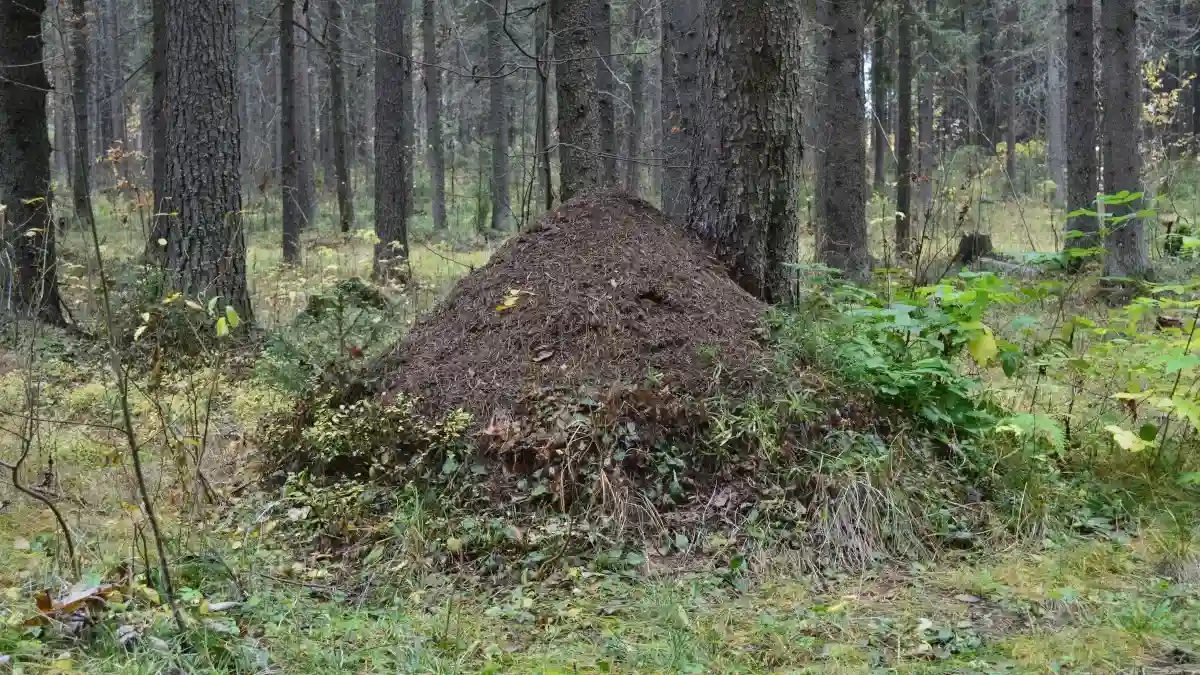
Photo by Maslovestas on Unsplash
- The Warehouse and the Ant Colony: An Unlikely but Revealing Comparison
- Nature vs. Business: A Side-by-Side View
- Smarter Warehouse Management: Planning, Not Hoarding
- Collective Intelligence: The Power of Continuous Flow
- Resilience Above All: The Art of Adapting to the Unexpected
- Eliminating Waste: Efficiency as a Cultural Commitment
- Back to Basics: What the Ant Colony Ultimately Teaches Us
- Test Your Organisation: A Self-Assessment Toolkit
- Further Reading
Article contents
- The Warehouse and the Ant Colony: An Unlikely but Revealing Comparison
- Nature vs. Business: A Side-by-Side View
- Smarter Warehouse Management: Planning, Not Hoarding
- Collective Intelligence: The Power of Continuous Flow
- Resilience Above All: The Art of Adapting to the Unexpected
- Eliminating Waste: Efficiency as a Cultural Commitment
- Back to Basics: What the Ant Colony Ultimately Teaches Us
- Test Your Organisation: A Self-Assessment Toolkit
- Further Reading
The Warehouse and the Ant Colony: An Unlikely but Revealing Comparison
How many times have you paused during a summer walk to watch a line of ants transporting a load ten times their own size? The instinctive reaction is usually a smile — yet what we are actually witnessing is a masterclass in warehouse management: a logistics system refined over millions of years of evolution that puts most modern operations to shame.
That small, teeming colony has far more in common with the beating heart of your organisation — the warehouse — than you might initially suspect. The parallels are not merely poetic. They point to fundamental principles of planning, coordination, resilience, and waste elimination that apply equally to insects and enterprises.
Nature vs. Business: A Side-by-Side View
Before diving deeper, it helps to lay the comparison out clearly. The table below distils the key behavioural differences between a colony and a typical warehouse operation — and, more importantly, what each reveals about the other.
How nature does it
- Planning: Strategic accumulation for winter — no surplus, no waste.
- Collaboration: Every individual has a defined role serving the colony as a whole.
- Efficiency: Optimised routes, zero unnecessary movement.
- Adaptability: New paths found instantly when the original is blocked.
- Goal: Survival of the colony.
How we do it
- Planning: Purchasing driven by forecasts — sometimes by anxiety.
- Collaboration: Departments often operate in silos, with limited cross-functional communication.
- Efficiency: Processes that are sometimes redundant, movements that are sometimes inefficient.
- Adaptability: Slow to respond to supplier delays or unexpected demand spikes.
- Goal: Customer service, cost optimisation, return on investment.
The lesson here is deceptively simple: align departmental objectives with an overarching vision — exactly as the colony does.
Smarter Warehouse Management: Planning, Not Hoarding
Watch an ant carefully and you will notice something striking: nothing is collected at random. Every resource is evaluated, transported, and stored in a specific chamber of the formicary with a clear purpose — ensuring the colony’s survival through winter. There is no room for the impulse to accumulate “just in case”. Every seed, every fragment of leaf, has a precise role to play.
This raises an uncomfortable but necessary question for any warehouse manager: how much of your current stock is the result of intelligent planning, and how much is the product of anxiety or habit? The ant colony teaches us that indiscriminate accumulation carries very real risks — obsolescence, deterioration, hidden carrying costs, and precious space consumed by inventory that adds no value. Smart stock management starts not with software, but with intent.
Collective Intelligence: The Power of Continuous Flow
The true genius of the ant colony lies not in any individual insect, but in the collective. There is no lone hero who does everything. There are scouts, carriers, defenders, and storekeepers — each performing a distinct function, each contributing to a shared outcome. Information travels in real time through pheromone trails and physical contact, creating perfectly coordinated workflows. When a route is blocked, the system identifies an alternative immediately — without panic, without emergency meetings, without escalation.
Now consider your own supply chain through the same lens. Is your warehouse an interconnected organism, or a collection of separate departments that happen to share a building? How fluid are the transitions between ordering, receiving, storage, and despatch? A bottleneck at any point in this chain is the operational equivalent of a stone dropped on an ant trail — it stops everything, generating delays, inefficiencies, and avoidable cost. Smooth information flow is not a nice-to-have; it is the circulatory system of an efficient operation.
Resilience Above All: The Art of Adapting to the Unexpected
The external environment is inherently unpredictable. It can rain without warning. A predator can destroy an established trail. A food source can disappear overnight. The strength of the ant colony lies not in the rigidity of its plan, but in the clarity of its guiding principle: survival. Strategies shift, routes are recalibrated, priorities are reordered — constantly and without drama.
How resilient is your warehouse when the unexpected happens? Are you genuinely prepared to respond to a supplier who delivers late, a sudden demand spike, or a shift in market conditions? Building a flexible system capable of rapid reorganisation is no longer optional. It is the difference between a business that merely survives disruption and one that is strengthened by it. Resilience is not a contingency plan filed in a drawer — it is a capability embedded in the way you operate every day.
Eliminating Waste: Efficiency as a Cultural Commitment
For an ant, every movement represents energy expended. That energy must be repaid by the value of what is carried. This is why inefficient routes, unnecessary loads, and wasted effort simply do not exist in a well-functioning colony. If an obstacle is too large to overcome, it is circumvented. If a load is too heavy for one ant, the work is shared. The system self-optimises continuously, without mandate or instruction.
- Never travel unnecessary or excessively long routes.
- When a load is too heavy, they divide it and collaborate.
- No wasted energy — every movement has a purpose.
- Routes are continuously optimised around obstacles.
- Map your movement flows to identify and eliminate unnecessary steps.
- Train your team on collaborative working and efficient load management.
- Adopt metrics to measure operational efficiency — picking time, travel distance per order, error rates.
- Review your warehouse layout periodically and optimise it as your operation evolves.
Waste elimination is not a one-off project. Like the colony’s route optimisation, it must become an embedded habit — a cultural default, not an occasional initiative. The most efficient warehouses are not those with the best technology; they are those where every person, at every level, instinctively asks: is this movement necessary?
Back to Basics: What the Ant Colony Ultimately Teaches Us
The parallel between the formicary and the modern warehouse brings us back to something fundamental about warehouse management — principles that precede technology by millions of years. The point is not to replace your ERP with pheromones. It is to recognise that any tool, however sophisticated, is only as effective as the principles on which it rests. Software does not fix a culture of hoarding. Automation does not resolve a silo mentality. Technology amplifies what is already there — for better or worse.
The Ant Manager: Key Takeaways
- Plan, don’t hoard: Every resource in your warehouse should have a defined purpose.
- Intelligence lives in the collective: Promote communication and fluid handoffs between departments.
- Be an organism, not a machine: Build a resilient system that adapts to disruption rather than freezing in front of it.
- Hunt down waste: Efficiency is a cultural commitment, not a one-off task.
- The goal is greater than the individual: Work for the balance and collective good of the business as a system.
The next time you notice a line of ants crossing your path, resist the urge to walk straight past. Pause for a moment and observe. That tiny community is staging the oldest and most powerful lesson in teamwork, resilience, and organisation — one that, if applied with discipline and intention, can transform your warehouse from a cost centre into a genuine competitive advantage for the entire business.
Test Your Organisation: A Self-Assessment Toolkit
The following questions are designed not to generate a score, but to provoke honest reflection. Work through them individually or use them as a team discussion framework. The answers will tell you more than any audit.
Analyse your oldest inventory lines. Are they there because of a specific demand forecast, or because of a fear of running out? What is the actual stock turnover rate for these items — and what does that tell you about the decisions that put them there?
How long does it take for a critical piece of information — “this supplier is running late” — to travel from procurement to logistics to sales? Where are the communication bottlenecks, and what decisions are being made in the dark as a result?
What happens if a carrier cancels a collection at short notice? Or if you receive a sudden spike in orders? Do you have a genuine contingency plan, or does the system simply grind to a halt while someone escalates the problem?
Run a simple observation exercise: count the steps a warehouse operative takes to pick and pack an average order. How much time is spent searching for misplaced stock? These are energy losses — the operational equivalent of an ant taking the long way round, every single time.
Does your warehouse measure only its own performance — despatch times, pick accuracy — or is it aligned with wider commercial objectives, such as customer satisfaction and overall inventory cost? Is there a shared, systemic view of what success looks like across the business?
Which of these lessons from the ant colony could you begin applying in your organisation this week?
Further Reading
If this perspective has sparked your curiosity, the following resources offer valuable depth on collective intelligence, supply chain resilience, and smarter inventory management.
- TED Talk — Deborah Gordon, The Emergent Genius of Ant Colonies: A brilliant introduction to collective intelligence and self-organisation from one of the world’s leading myrmecologists.
- McKinsey — Building Supply Chain Resilience: A rigorous analysis of what it takes to build a supply chain capable of absorbing and recovering from disruption.
- Zoho Inventory — EOQ Calculator (Economic Order Quantity): A practical, free tool for moving from anxiety-driven purchasing to demand-driven stock planning.
- Data Stories: A curated collection of projects and case studies focused on optimising operational flows, managing inventory, and improving performance through data.
Share this article