Arduino UNO R4: The Next Level of Electronics
Photo by User6702303 on Freepik
- Why the Arduino UNO R4 Changes Everything
- Upgraded Hardware for Modern Demands
- Two Variants, Endless Possibilities
- From STEM Education to Industrial Prototyping
- Case Study: Arduino UNO R4 in Precision Agriculture
- Arduino UNO R4 vs the Alternatives
- Resources Worth Bookmarking
- More Than a Board — An Ecosystem
Article contents
- Why the Arduino UNO R4 Changes Everything
- Upgraded Hardware for Modern Demands
- Two Variants, Endless Possibilities
- From STEM Education to Industrial Prototyping
- Case Study: Arduino UNO R4 in Precision Agriculture
- Arduino UNO R4 vs the Alternatives
- Resources Worth Bookmarking
- More Than a Board — An Ecosystem
Why the Arduino UNO R4 Changes Everything
For fifteen years, Arduino has done more than simplify electronics — it has made the field genuinely accessible to everyone. What began as a technical tool for specialists evolved into a creative platform embraced by students, makers, teachers, artists and hobbyists worldwide. The simplicity of its programming language, a vast body of online documentation, and a vibrant community ever ready to share solutions have made the Arduino UNO a global reference point.
It is no exaggeration to say that countless educational projects, innovative prototypes and early-stage startups trace their origins to that familiar blue board. With the arrival of the Arduino UNO R4, a new chapter begins: more powerful, more versatile, and ready to tackle challenges ranging from smart agriculture to industrial applications and next-generation technical education.
Upgraded Hardware for Modern Demands
The UNO R4 retains the familiar form factor of the UNO series — ensuring full backward compatibility with thousands of existing shields and accessories — while completely overhauling what lies beneath. At its core sits a Renesas RA4M1 ARM Cortex-M4 processor running at 48 MHz, delivering roughly ten times the performance of the classic R3 based on the ATmega328P. This is not a modest spec bump; it is a generational shift in processing capability.
Memory has been upgraded to 256 KB of Flash and 32 KB of SRAM, making it well suited to complex sketches, data handling and advanced libraries. The board also introduces a USB-C port — a more robust and future-proof standard — alongside an integrated DAC and CAN Bus support, opening the door to industrial, home automation and audio prototyping applications that would previously have required external modules.
Two Variants, Endless Possibilities
The R4 line comes in two distinct versions to suit different use cases and budgets. The UNO R4 Minima is the lean, cost-effective option — ideal for schools, beginners and any project where wireless connectivity is not a requirement. The UNO R4 WiFi integrates the ESP32-S3 chip, adding wireless connectivity and edge AI capability through TensorFlow Lite support, making it a genuinely capable platform for IoT and machine learning experiments.
Together, the two variants cover an exceptionally broad range of applications: real-time control systems, IoT gateways, wireless dashboards with graphical interfaces and robotics projects that demand on-board data processing. The backward compatibility means that existing Arduino users can step up without leaving their existing toolkit behind.
From STEM Education to Industrial Prototyping
The UNO R4 is well positioned across the full spectrum of users. In educational settings, it supports STEM laboratories, coding courses and hands-on experiments with light, temperature and motion sensors, offering a low-barrier entry point into the Internet of Things. For makers and enthusiasts, it enables autonomous robots with on-board data processing, interactive art installations, DIY MIDI controllers and digital synthesisers.
For professionals and small-to-medium enterprises, the R4 represents a cost-effective prototyping platform for Industry 4.0 applications. Environmental monitoring systems, precision agriculture deployments and connected industrial devices can all be built and tested at a fraction of the cost of dedicated industrial hardware — accelerating the journey from concept to working prototype.
Case Study: Arduino UNO R4 in Precision Agriculture
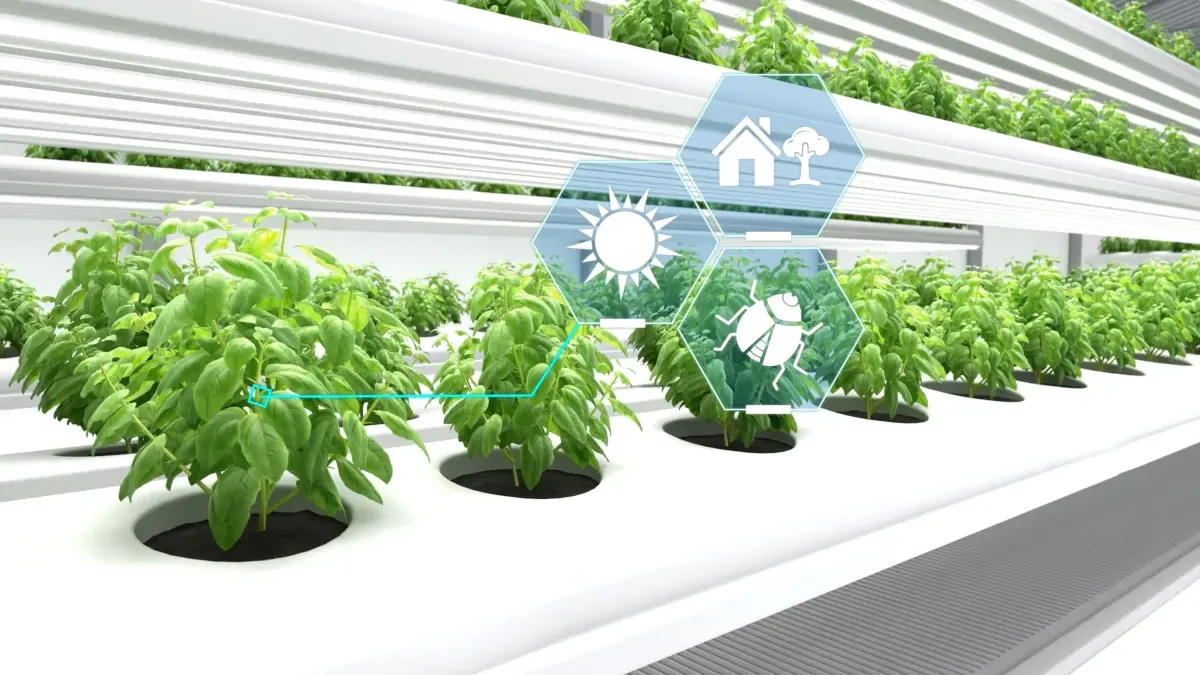
Precision agriculture is one of the most compelling application areas for the UNO R4 WiFi. Modern agricultural operations require continuous data collection, process automation and remote access — all areas where the R4’s expanded capabilities make a tangible difference. The result is a modular, affordable and highly customisable platform for field deployment.
- Smart irrigation: Soil moisture sensors paired with solenoid valves can reduce water consumption by up to 30%, with weather forecast integration via API ensuring irrigation decisions are always informed by real conditions.
- Microclimate monitoring: Sensors such as the DHT22 or BME280 track temperature, humidity and atmospheric pressure in real time, with automated alerts for frost risk or heat stress delivered via Telegram or email.
- Greenhouse automation: Blinds, fans and grow lights can be managed automatically against customisable thresholds, with data visualised on a local IPS display or an online dashboard.
- Data analysis pipeline: Sensor data collected via the UNO R4 can be exported and analysed using Python, R or Power BI, enabling meaningful insight from field measurements. In the Data Insight section you will find practical examples of projects built with these languages and analytical tools.
Arduino UNO R4 vs the Alternatives
Comparing the UNO R4 with alternatives such as the Raspberry Pi Pico and the ESP32 reveals a clear differentiation in positioning. The R4 leads decisively on ease of use and community support — benefits that reflect Arduino’s fifteen-year investment in documentation, tutorials and accessible tooling. Backward compatibility is another unique advantage: neither the Pi Pico nor the ESP32 offers the same level of drop-in support for existing Arduino shields and libraries.
Where raw processing power is the primary concern, the Raspberry Pi Pico and ESP32 hold an edge. The ESP32 also surpasses the R4 WiFi on wireless performance for highly demanding applications. However, for the vast majority of educational, prototyping and light industrial use cases, the UNO R4 strikes the most balanced combination of accessibility, capability and ecosystem depth available at its price point.
Resources Worth Bookmarking
The Arduino ecosystem is well supported by official resources. The Arduino Project Hub hosts more than 5,000 community-shared projects, providing a rich source of inspiration and working reference code. The official GitHub repository for the UNO R4 contains the board’s source code and up-to-date libraries, maintained directly by the Arduino team.
More Than a Board — An Ecosystem
At around £25–30, the Arduino UNO R4 offers a genuinely sustainable entry point into IoT, automation and distributed intelligence. Its combination of significantly upgraded hardware, full backward compatibility and a mature, active community makes it one of the most compelling microcontroller platforms available today — regardless of whether you are a teacher building a curriculum, a maker exploring a new project idea or an engineer validating a prototype concept.
The future of hardware development is open-source, and the UNO R4 is one of its most capable vehicles.
Share this article